Leonberg, 3rd September 2026 – What began in 2016 with the first Hoffnungshaus (House of Hope) in Leonberg has grown over the past ten years into a housing and integration concept spanning 13 locations and more than 40 houses. Today, around 800 people from 31 nations live in Hoffnungshaus communities. As Hoffnungsträger marks this anniversary, it looks back on ten years of community living, connection and social participation – while also looking to the future with its new neighbourhood development in Gaildorf.
FROM AN IDEA TO A HOUSING AND INTEGRATION CONCEPT
The first Hoffnungshaus grew out of the idea of developing a model for successful integration, starting with housing: integration and social cohesion can only succeed when people have opportunities to meet and connect.
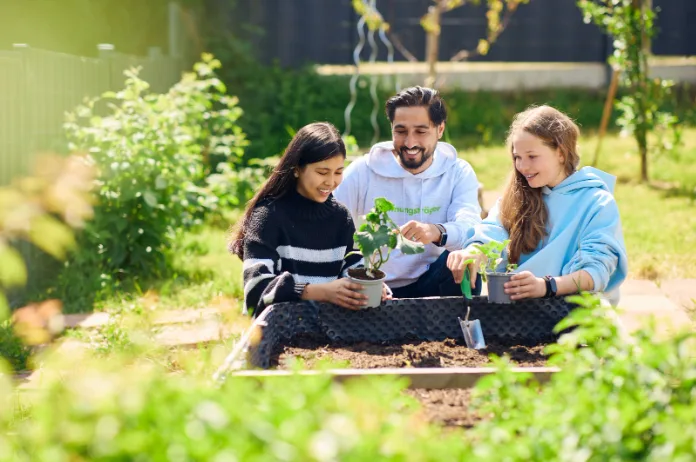
The Hoffnungsträger Foundation therefore combines affordable housing with a social concept. People with and without refugee backgrounds live together under one roof in roughly equal numbers, encounter one another in everyday life, build a community and share life and faith. The aim is to make social participation, personal responsibility and strong neighbourhood communities an integral part of everyday life from the very beginning.
With each new location came new experiences, and the concept continued to evolve. Its fundamental principle, however, has remained unchanged: social cohesion depends on bringing different people together. It requires relationships, opportunities for participation and spaces where people can connect as part of their everyday lives.
THE IMPACT OF COMMUNITY LIVING
Behind the numbers are personal stories and very different journeys: from arriving in an unfamiliar environment and forming new connections and friendships to education, employment and growing independence.
One story from a Hoffnungshaus illustrates this particularly powerfully. A Kurdish family with four children was forced to flee Turkey because of political persecution. When they arrived in Germany, fear, uncertainty and the effects of severe traumatic experiences were constant companions. Even today, they are still fighting for the right to remain in Germany permanently.
At the Hoffnungshaus, they live next door to a single German man. Outside the Hoffnungshaus, their paths would probably never have crossed. But living as neighbours has led to a close and meaningful bond.
Today, helping one another is simply part of their everyday lives. The man usually leaves his apartment door open, allowing the children to move naturally between both homes, while the family regularly invites their neighbour to join them for meals. They take part in Hoffnungshaus activities together and spend time with one another. What began as a chance neighbourhood connection has developed into a supportive relationship that brings stability and joy to both sides.
For Tobias Merckle, founder of Seehaus e.V. and the Hoffnungsträger Group, this reflects one of the key lessons learned from ten years of Hoffnungshaus:
“When we opened the first Hoffnungshaus in 2016, we wanted to show that integration can work much better when people share their lives as part of a community. We wanted to create a place where local residents and newcomers could meet, take responsibility and shape everyday life together.
Ten years later, seeing how this idea has developed across 13 locations – and how many different lives and personal journeys have become part of it – is something very special to me. We hope that our model will inspire others and lead to many more Hoffnungshaus communities, but also to a change in thinking at municipal, state and federal level: away from segregation in container accommodation and towards inclusive living.”
CONNECTION AND PARTICIPATION IN EVERYDAY LIFE
The wide range of activities over the past year also demonstrates just how diverse community life has become across the different locations. In 2025, 419 residents came together for a cross-location community day.
Educational and community programmes also create tangible opportunities for participation. In 2025, 75 children at four locations took part in the Zahlenhelden (number heroes) maths holiday programme. Combining playful learning with targeted support, the programme helps children strengthen their mathematical skills.
Language learning also plays an important role. In Leonberg and Straubenhardt, 69 women with refugee backgrounds meet regularly to learn German together and exchange ideas and experiences relating to everyday life, culture and society.
These programmes complement everyday life at Hoffnungshaus. They create opportunities for connection, education and exchange, while supporting residents in developing their skills, building their own prospects for the future and participating actively in society.
GAILDORF: TAKING TEN YEARS OF EXPERIENCE FORWARD
Marcus Witzke, CEO of the Hoffnungsträger Foundation, sees the new Hoffnungshaus neighbourhood in Gaildorf as an important next step:
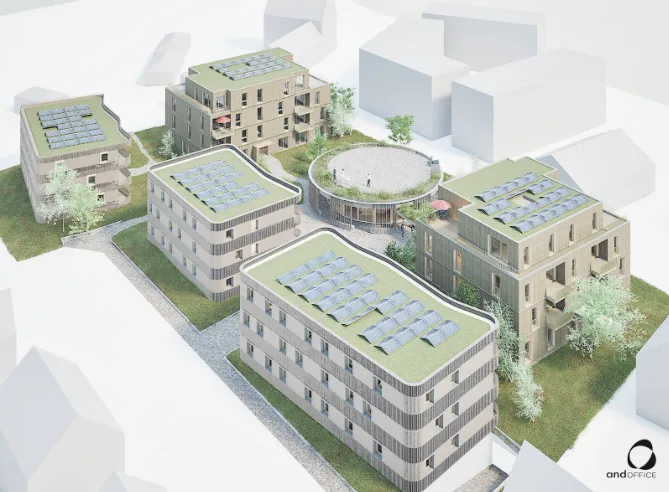
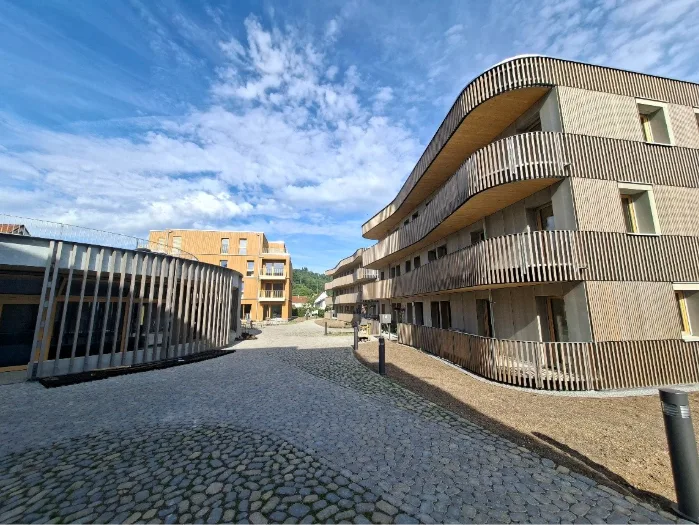
“Gaildorf marks another significant step in our development. What we are creating here is much more than another Hoffnungshaus. It is an entire neighbourhood where we can build on ten years of experience and take what we have learned a step further.
Different generations and people in different life situations will come together here, with dedicated spaces for connection and community life. Gaildorf is therefore a very tangible example of how the Hoffnungshaus concept can continue to evolve.”
In its anniversary year, Gaildorf therefore represents both a reflection on the past and a vision for the future: the experience gained at existing locations is feeding directly into the continued development of the concept.
The Gerhard und Ilse Schick Stiftung, which is supporting the project as a funding partner, also sees Gaildorf as a forward-looking model:
“Our approach is guided by the questions of what we can do for society and what kind of society we want to live in. Hoffnungshaus offers far more than housing: it creates long-term prospects and enables genuine social integration through supported community living.
Residents receive guidance and support in their everyday lives from the on-site management team, helping to foster participation and community. At the same time, the concept gives people the opportunity to get involved themselves, support others and make their own contribution to society.”
TEN YEARS OF HOFFNUNGSHAUS – AND LOOKING AHEAD
Above all, ten years of Hoffnungshaus are about the people who bring the concept to life: residents with and without refugee backgrounds, volunteers, employees, partners and supporters who help shape community life and social participation at each location.
The anniversary is therefore not only an opportunity to look back. The experiences of the past ten years also provide the foundation for the concept’s continued development – and for creating more places where people from different backgrounds and in different life situations can live together and take responsibility for their communities.
SAVE THE DATE: GAILDORF OPENING ON 24 OCTOBER 2026
In its anniversary year, Hoffnungsträger will open its largest Hoffnungshaus neighbourhood to date in Gaildorf on Saturday, 24th October 2026.
Media representatives will have the opportunity to explore the new neighbourhood, conduct interviews and gain first-hand insights into the continued development of the Hoffnungshaus concept.
Please save the date. A separate press invitation containing the programme, meeting point, interview partners and further information will follow.
We are also happy to support media outlets planning features, background interviews or retrospectives on ten years of Hoffnungshaus. On request, we can arrange contact with people who live at Hoffnungshaus, contribute to the concept or have been involved in its development over many years.
About Hoffnungsträger
The Hoffnungsträger Foundation was founded by Tobias Merckle in 2013 with the aim of empowering people to become beacons of hope for others. Under the leadership of CEO Marcus Witzke, its work has grown to include inclusive housing projects such as Hoffnungshaus, as well as international programmes supporting offenders and their families.
Today, the Hoffnungsträger Group includes Hoffnungsträger Projektentwickler GmbH, Hoffnungsträger Global Impact and Rosskopf + Partner, among others. Its subsidiary Sinngeber also enables values-based philanthropy for people who want their engagement to contribute to positive social change.
Across its various programmes, Hoffnungsträger combines empowerment, social innovation and a commitment to the common good. Its key areas of focus are inclusive living, restorative justice and philanthropy, with the aim of strengthening social participation and creating sustainable opportunities for the future.
Future information:
www.hoffnungstraeger-gruppe.de
www.hoffnungstraeger.de
Films about Hoffnungshaus:
Visualisierung zum Quartier in Gaildorf
Leben im Hoffnungshaus
Hoffnungsträger im Quartier